
Basement Water Damage: What to Do After a Leak, Flood, or Sump Pump Failure
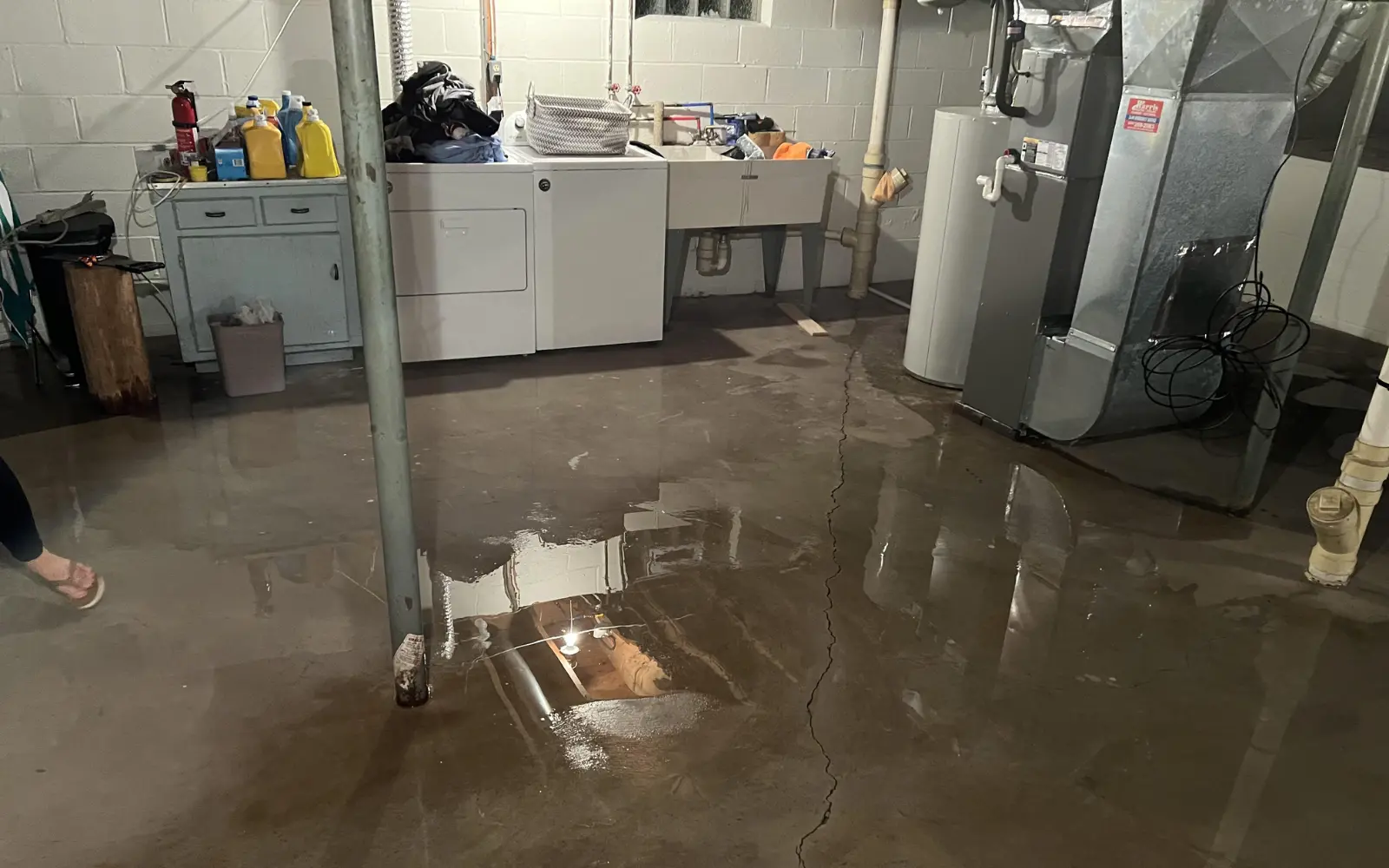
Basement water has a way of showing up at the worst possible time. Around the floor drain. Under the carpet. Behind the finished wall. Around boxes you meant to organize three years ago. No judgment. We’ve all got a basement box with “misc.” written on it like that explains anything.
Basement water damage can come from a leaking pipe, sump pump failure, heavy rain, foundation seepage, sewer backup, or stormwater entering through a low point. The source matters because the water may be clean, gray, or contaminated.
Finished basements also hide moisture well. Water can sit behind drywall, under flooring, inside insulation, and around trim long after the surface looks calmer.
For the full recovery process, start with our complete guide to water damage restoration. Here’s what to do first when your basement has water damage.
First, Don’t Walk Into Basement Water Until You Know It’s Safe
Basements come with extra safety concerns because water often collects around electrical panels, outlets, appliances, extension cords, HVAC equipment, water heaters, and floor drains. That’s a lot of things you don’t want mixing with standing water.
If you don’t know where the water came from, treat the area with caution. Sewer backups, stormwater, and floor drain overflows are not “just water.” They may carry contaminants that shouldn’t be tracked through the house, touched, or blown around with fans.
Stay out of the basement if:
- Water is near the electrical panel, outlets, or plugged-in appliances.
- The water came from a sewer backup, floor drain, or outside flooding.
- You smell sewage, fuel, gas, or strong chemical odors.
- The ceiling above is sagging or dripping near fixtures.
- You can’t see the floor clearly.
- Kids or pets may enter the area.
If there’s a serious electrical, gas, or structural concern, call the appropriate emergency service, utility company, plumber, or electrician.
For broader safety guidance, read is it safe to stay in a home after water or fire damage. If the water source is unclear, review what are the categories and classes of water damage.
If your basement water may be unsafe, don’t wade in like you’re testing a creek. Call Reyes Restoration and we’ll help you figure out the safest next step.
Find the Source If You Can, But Don’t Turn It Into a Treasure Hunt
Finding the water source helps determine safety, cleanup, drying, and insurance questions. But you don’t need to put yourself at risk trying to solve the whole mystery. This is not the basement edition of a detective show.
Common basement water sources include:
- Burst or leaking pipe
- Water heater leak
- Washing machine or utility sink overflow
- Sump pump failure
- Power outage during heavy rain
- Foundation seepage
- Window well leak
- Floor drain or sewer backup
- Stormwater entering through doors, walls, or low points
- Condensation or HVAC drain issues
A pipe leak or water heater leak may start as clean water. A washing machine or utility sink issue may involve gray water. Sewer backups, floor drain overflows, and stormwater are higher-risk and need professional handling.
Sump pump failures can vary. Sometimes the pump failed during a heavy rain and the water came from outside. Sometimes there’s a backup issue. Sometimes the pump simply gave up because machinery enjoys having opinions at inconvenient times.
If the issue started with plumbing, see burst pipe water damage: what homeowners should do first. For local source patterns, read the most common causes of water damage in Maryland homes.
Know where the water came from? Great. Not sure? Also normal. Call Reyes and we’ll help identify the source without asking you to become a basement detective.
Stop More Water From Coming In When It’s Safe
Once safety is handled, the next goal is stopping more water from entering the basement. What you do depends on the source.
- Shut off the water if a pipe, fixture, or appliance is leaking.
- Stop using affected plumbing if a drain or sewer backup is suspected.
- Check the sump pump only if the area is safe and accessible.
- Move water away from the foundation by checking downspouts and exterior drainage from outside if it’s safe.
- Call a plumber or appropriate specialist for active plumbing, drain, sewer, or sump pump issues.
Stopping the source and drying the damage are two different jobs. A plumber may repair the pipe, drain, or sump pump. A restoration company handles the water damage: extraction, drying, contaminated material removal when needed, moisture checks, and repair planning.
This is the difference between water mitigation vs. water damage restoration. For immediate steps in any water loss, read what should you do immediately after water damage.
Once the water is stopped — or if it won’t stop — call Reyes Restoration. We’ll help control the damage while the source repair gets sorted out.
Document Basement Water Damage Before Cleanup Gets Too Far
Documentation can help with insurance, restoration planning, and decisions about damaged belongings. Take photos and videos if it’s safe, but don’t delay emergency help just to get the perfect angle. The basement is wet. It doesn’t need a photoshoot.
Photograph or record:
- Standing water depth and affected rooms
- Wet carpet, flooring, drywall, baseboards, and trim
- Damaged boxes, furniture, and belongings
- Water near drains, sump pump, windows, doors, or appliances
- The suspected source
- Any visible stains, mud, debris, or sewage indicators
- The date and time you discovered the damage
You can send photos to Reyes to help us triage faster. That said, an on-site inspection and moisture readings are still important. Water can hide under flooring, behind walls, and inside finished materials.
For insurance questions, see is water damage covered by homeowners insurance. For cost planning, read how much water damage restoration costs.
Take safe photos, then call Reyes. We’ll help document what happened and move quickly before your basement starts developing its own ecosystem.
Why Basement Water Damage Can Get Expensive Fast
Basements can take on a surprising amount of damage from a small amount of water. FEMA’s National Flood Insurance Program says just one inch of water in a typical home can cause up to $25,000 in damage, including damage to drywall, flooring, carpet, furniture, personal belongings, and electronics. (FloodSmart)
Basements are especially vulnerable because they sit below grade and often contain absorbent materials and stored belongings. Finished basements add more materials for water to damage. Lovely living space. Very absorbent.
Basement water can affect:
- Carpet and carpet pad
- Laminate, vinyl, or hardwood flooring
- Drywall and insulation
- Baseboards and trim
- Framing
- Cabinets or built-ins
- HVAC equipment and water heaters
- Stored contents
- Electrical outlets and appliances
Even unfinished basements need proper cleanup if the water is contaminated or reaches framing, contents, mechanical systems, or stored items. Finished basements can hide moisture behind walls and under flooring, which is where small-looking water damage gets expensive.
For hidden spread, read hidden water damage. If wet drywall is involved, see do you need to remove drywall after water damage.
If basement water reached walls, flooring, storage, or mechanical areas, call Reyes quickly. The sooner we inspect and dry it, the better chance you have of keeping the job controlled.
What You Can Safely Move — and What Should Wait
There are a few things homeowners can do before the crew arrives, as long as the area is safe and the water source does not appear contaminated.
Usually okay if the area is safe:
- Move dry belongings away from wet areas.
- Lift small items off the floor.
- Pull dry storage bins away from damp walls.
- Take photos of damaged contents before moving them.
- Keep kids and pets out.
Better to wait for professionals:
- Pulling up wet carpet and pad
- Cutting drywall
- Moving items through sewage or stormwater
- Running fans on contaminated materials
- Removing insulation
- Turning on wet appliances
- Throwing away damaged items before documentation when insurance may apply
Contaminated water changes everything. If stormwater, sewage, or floor-drain water is involved, don’t handle affected contents without guidance. It can spread contamination into clean areas and make cleanup harder.
If you’re wondering where DIY ends, read can you fix water damage yourself.
Move what’s clearly safe, then pause. Call Reyes before you start hauling wet basement contents around like it’s a workout plan nobody asked for.
How Professional Basement Drying Works
A basement can look calmer once the standing water is gone, but calm is not the same as dry.
Professional basement drying starts with inspection and moisture mapping. The crew checks where the water traveled, what materials are affected, and whether the water may be contaminated. If standing water is present, extraction comes next.
From there, the plan may include removing unsalvageable or contaminated materials, cleaning and sanitizing affected areas, setting air movers and dehumidifiers, and monitoring moisture readings until the structure is dry.
Finished basement materials need special attention. Drywall, insulation, carpet pad, baseboards, and flooring can trap moisture. If contaminated water is involved, drying alone is not enough. Cleaning, removal, and sanitizing may be required before repair work begins.
The goal is to dry what can be dried, remove what can’t safely stay, and document the process clearly. Nobody benefits from pretending wet insulation behind a wall is “probably fine.” That’s how basements develop plot twists.
For a deeper breakdown, read how restoration companies dry out a house after water damage. For repair timing, see how long does it take to repair water damage in a house.
Basement drying should be measured, not guessed. Call Reyes and we’ll check moisture levels, explain the plan, and get the right equipment working.
Will Insurance Cover Basement Water Damage?
Insurance coverage depends on the source of the water and your specific policy.
Sudden indoor pipe or appliance leaks may be covered. Floodwater from outside is usually not covered by standard homeowners insurance and may require flood insurance. Sewer or sump pump backup often requires a specific endorsement. Gradual seepage or long-term maintenance issues may be denied.
Your carrier decides coverage based on your policy language and the cause of loss. Reyes can help document the damage with photos, moisture readings, and work notes, but we don’t decide coverage — and we won’t pretend we do.
For the fuller insurance breakdown, read is water damage covered by homeowners insurance.
Insurance questions are easier when the damage is documented early. Call Reyes and we’ll help record what happened while we focus on getting the basement dry.
The Bottom Line
Basement water damage can come from pipes, appliances, sump pumps, seepage, drains, sewer backups, or storms. The first step is safety, especially around electricity, appliances, and potentially contaminated water.
Stop the source if it’s safe. Document the damage. Move dry items only if conditions are safe. Then call professionals when water reaches building materials, contents, mechanical systems, or anything you can’t fully dry and verify.
Basement water has a way of spreading quietly. Call Reyes Restoration today, talk with a real tech, send photos if helpful, and get clear next steps before the damage moves deeper into your home.
Reyes Restoration is one of the most trusted names in restoration in central Maryland including Baltimore, Annapolis and Washington DC.
Specializing in water & fire damage restoration, mold remediation, and reconstruction, we leave clients across Maryland and the DMV in a better position than before the loss.
Call 410-412-8457 and speak to a technician today!