
Can You Remediate Mold Yourself Or Do You Need a Professional?
When homeowners find mold, the first instinct is usually pretty simple: clean it fast and move on.
Nobody wants mold hanging around the house, and most people do not love the idea of calling in help for something that looks like a small patch on caulk, drywall, or a basement corner. But with mold, the real question is usually not, “Can I scrub this?” It is, “Am I looking at a small surface issue, or am I looking at a moisture problem that is bigger than it seems?”
That distinction is very important.
Some minor mold cleanup may be manageable for a homeowner. Some absolutely is not. The challenge is knowing which situation you are actually in before you make the problem worse, spread it around, or spend three weekends cleaning the same spot that keeps coming back.
This article will give you the practical answer. If you’re looking for more information, our guide to mold remediation will tell you everything you need to know.
The Short Answer: Sometimes, But It Depends on What You’re Actually Looking At
Yes, there are situations where a homeowner may be able to clean a small mold issue. But not all mold problems belong in the DIY category.
A little surface mildew on a non-porous bathroom surface is very different from mold that showed up after a leak, keeps returning on sealant, or appears on drywall, trim, or flooring. The same goes for a musty smell with no visible source. That is often a clue that the real problem is hidden.
In other words, the size of the visible patch is not the only thing that matters. The material matters. The moisture source matters. Whether it keeps coming back matters. And whether the issue may be spreading behind finished surfaces matters too.
If you only judge the problem by what is easiest to see, mold can fool you pretty quickly.
When DIY Mold Cleanup May Be Reasonable
There are situations where a homeowner may be okay to handle a small mold issue without jumping straight to full professional remediation. The key is that the problem needs to be limited, understood, and not tied to a bigger moisture issue.
Small, isolated area
If the growth is confined to one small, easy-to-access spot and does not extend across multiple materials or rooms, DIY cleanup may be reasonable. A little patch is very different from a problem that keeps widening once you look closer.
Non-porous or easy-to-clean surface
Tile, glass, metal, and some sealed surfaces are generally different from drywall, insulation, carpet, or unfinished wood. If the growth is sitting on a cleanable surface rather than soaking into a porous one, the situation may be more manageable.
No ongoing leak or water damage
If the area is dry, the moisture cause is known, and the original condition has already been corrected, that changes the equation. If water is still getting in, or if humidity is still high enough to support growth, cleaning the surface will not go very far.
No recurring growth
This one is big. If the same spot keeps coming back after cleaning, that is a sign the problem may not be surface-level. Recurrence usually means there is an underlying moisture issue or hidden contamination nearby.
No health-sensitive occupants
If someone in the home has asthma, allergies, respiratory sensitivity, or a weakened immune system, it makes sense to be more cautious. Even a relatively small mold issue can be more disruptive when someone in the household is more sensitive to indoor air problems.
A good rule of thumb is this: if the issue is small, visible, understood, and not recurring, DIY cleanup may be reasonable. Once those conditions start falling apart, the case for professional help gets stronger.
Warning Signs You May Be Dealing With More Than a DIY Job
This is where homeowners get tripped up. A mold problem can look minor at first and still point to something larger underneath.
The mold keeps coming back
If you have cleaned the same area more than once and it keeps returning, pay attention. This is especially common on shower caulk, window trim, baseboards, drywall corners, and inside sink cabinets. Repeated growth usually means the real issue was never fully solved.
There is a musty smell but little visible mold
That stale, earthy smell matters. If the room smells off but you only see a tiny amount of mold, or none at all, the visible part may not be the whole story. Hidden mold behind drywall, under flooring, or inside a cabinet cavity is not unusual.
Drywall, insulation, wood, or carpet may be affected
Once porous building materials are involved, it is not really a wipe-it-and-walk-away kind of job anymore. Mold on drywall, swelling trim, damp subflooring, stained ceiling material, or contaminated insulation usually calls for a closer look.
The problem started after a leak, overflow, or flood
Mold that follows a pipe leak, toilet overflow, basement seepage issue, storm intrusion, or appliance leak belongs in a different category than a little bathroom surface mildew. After a water loss, the question is not just whether mold is present. It is how far the moisture traveled and what materials stayed damp.
The area is larger than it first looked
Sometimes what looks like a small patch on the outside is connected to more growth behind the wall, under the flooring, or around the surrounding materials. If trim is loose, caulk is failing repeatedly, or there is staining beyond the visible mold, the scope may be bigger than it appears.
You see staining, peeling paint, bubbling drywall, or soft materials
These are classic moisture-related warning signs. Mold and moisture damage tend to travel together. If the material itself looks compromised, it is worth taking seriously.
The main thing to remember is that mold is often a moisture clue as much as a cleaning issue. When the house keeps telling you something is damp, that is the part to listen to.
Why DIY Mold Cleanup Sometimes Fails
DIY cleanup usually fails for one simple reason: it treats the visible growth but not the condition that caused it.
A homeowner scrubs the spot. It looks better. Maybe it even stays better for a little while. But if the drywall behind it is still damp, the bathroom ventilation still is not doing its job, the window keeps collecting condensation, or the cabinet base is still absorbing water from a slow leak, the problem is still there.
Bleach gets a lot of attention here, and not always for good reasons. People often assume it is the fix. On some hard surfaces, it may help clean visible residue. But it is not a complete answer for mold that has affected porous materials or areas where moisture remains. Looking cleaner and being resolved are not the same thing. Bleach could also cause the mold to release more spores, spreading the problem further.
DIY also tends to go sideways when people disturb contaminated materials without understanding how far the issue spreads. Pulling trim, cutting into drywall, or aggressively scrubbing recurring growth can turn a contained issue into a mess.
That is why mold cleanup is not just about removing what you can see. It is about knowing whether what you can see is the whole problem.
What Professionals Do Differently
A professional mold remediation approach is not just “better cleaning.” It is a different kind of response.
First, the problem gets evaluated in context. What caused the moisture? Is it ongoing? What materials are affected? Does the visible mold line up with the likely extent of the moisture? That investigation matters because mold problems are rarely random.
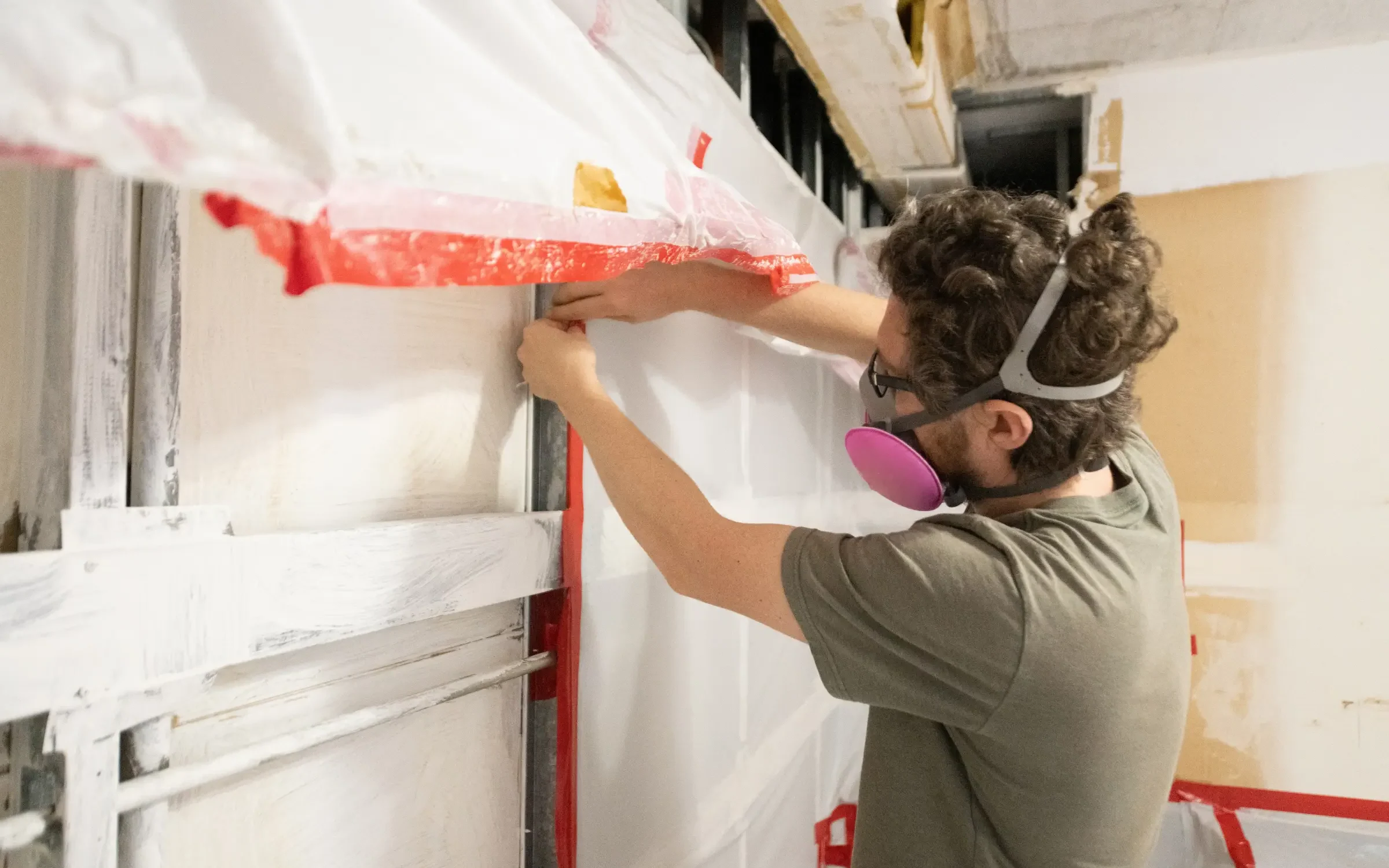
Then, when needed, the affected area can be contained so cleanup does not spread contamination into other parts of the home. Materials that cannot be reliably cleaned may be removed. Materials that can be salvaged may be cleaned using the right methods for that surface and condition. Just as importantly, the area gets dried properly and the moisture source gets addressed.
That broader approach fits how Reyes already operates during their professional mold remediation approach: not just handling the immediate damage, but helping homeowners move through the full problem with clear communication, practical next steps, and work that restores both the property and peace of mind.
A Simple Way to Decide: Clean It, Monitor It, or Call Now
If you are standing in your house staring at a questionable patch and trying to figure out whether this is a Saturday cleaning job or a real remediation issue, here is a simple way to think about it.
You may be okay to clean and monitor if…
The growth is small, on a non-porous or easy-to-clean surface, the moisture cause is obvious and corrected, and the issue has not been recurring. In that case, paying attention after cleanup matters just as much as the cleanup itself.
You should call soon if…
The mold keeps returning, there is a musty smell you cannot explain, the area involves drywall or other porous materials, or the problem seems tied to a past leak or humidity issue. Those are the kinds of situations where the visible part may not tell the full story.
You should call now if…
There was a recent water loss, the mold is spreading across multiple areas, materials feel wet or soft, or someone in the home has respiratory concerns and the environment may be contributing. At that point, guessing usually does not help much.
Common DIY Mistakes to Avoid
A lot of mold jobs get worse not because the first spot was huge, but because the response was too casual.
One common mistake is painting over mold and hoping it stays hidden. Another is repeatedly scrubbing the same area without ever asking why it keeps coming back. Bathroom mold is a classic example. If the caulk keeps growing mold again and again, the issue may be more than dirty sealant. It may point to trapped moisture, poor ventilation, or growth behind the finished surface.
Other common mistakes include ignoring condensation problems, assuming dried mold is gone for good, tearing into walls without a plan, and waiting too long because the patch “doesn’t look that bad.” Small-looking issues can stay small. They can also spread.
When the signs of mold keep repeating themselves, that is usually the moment to stop experimenting and take the hint.
So, Do You Need a Professional for Mold?
Sometimes no. Often yes.
Not every mold issue requires a full remediation crew. A small, one-time, surface-level issue in a controlled area may be something a homeowner can clean and monitor responsibly. But once the problem is recurring, connected to water damage, affecting porous materials, or giving off that telltale hidden-mold smell, the odds go up that you are dealing with more than a basic cleanup job.
The best question is not whether you can physically scrub a surface. It’s whether you can tell, with confidence, that the mold is limited, the moisture issue is solved, and the problem is not hiding somewhere nearby.
If the answer is no, it is usually worth bringing in a professional.
Call Reyes If You’re Not Sure What You’re Looking At
A lot of homeowners don’t call because they know it is a major mold problem. They call because they are not sure what they are looking at, and they want a straight answer before it gets worse.
That is a reasonable reason to call.
If you are seeing recurring mold, noticing a musty smell, or dealing with a spot that showed up after a leak or overflow, call Reyes Restoration and talk it through. If it helps, send a photo or short video when you reach out. That can make the first conversation more useful and help narrow down what may be going on and whether professional mold remediation is worth it.
The goal is not to make a small problem sound huge. It is to figure out what is actually happening and handle it the right way. Our approach is clear, steady, respectful, and focused on helping people feel more confident about what comes next.
FAQs
Can I clean mold off shower caulk myself?
Usually, yes. But if mold keeps coming back on the same caulk line, spreads into grout or drywall, or comes with a musty smell, there may be hidden moisture behind the surface.
Is bleach enough to remove mold?
No. Bleach may clean some visible residue on hard surfaces, but it is not a complete fix for mold affecting porous materials or moisture problems that are still active. It can also cause the mold to grow back more aggressively.
Does small mold always mean a small problem?
No. A small visible patch can still be tied to hidden moisture or growth behind a wall, under flooring, or around surrounding materials.
What if I smell mold but can’t see it?
That is worth paying attention to. Musty odors often show up before the mold itself becomes easy to see.
Can mold come back after I clean it?
Yes. If the moisture source was never corrected, mold can return even after the visible area looks better.
Reyes Restoration is one of the most trusted names in restoration in central Maryland including Baltimore, Annapolis and Washington DC.
Specializing in water & fire damage restoration, mold remediation, and reconstruction, we leave clients across Maryland and the DMV in a better position than before the loss.
Call 410-412-8457 and speak to a technician today!