
Can a House With Mold Be Fixed?
Finding mold in a house can send people straight to the worst-case scenario.
They see staining on drywall, smell something musty that will not go away, or pull back a piece of trim and find growth underneath, and the next thought is often: Is this room ruined?
In most cases, no.
A house with mold can very often be fixed. The real question is not whether the house is automatically a loss. The thing to consider is how widespread the issue is, what materials are affected, how long moisture has been present, and whether the problem gets handled the right way. Some mold problems are relatively limited. Others are more involved and require removal, drying, and reconstruction. But “mold” and “hopeless” are not the same thing.
That is the important shift. Panic does not tell you much. Identifying the scope does.
Looking for more help on Mold Remediation? Check out this article.
The Short Answer: Yes, Most Houses With Mold Can Be Fixed
Most houses with mold can absolutely be restored.
Mold does not automatically mean a total loss, and it does not automatically mean the structure is beyond saving. In many homes, the issue is tied to materials like drywall, insulation, trim, cabinetry, flooring, or other finishes that can be removed, cleaned, replaced, or repaired as part of a proper remediation and restoration process.
What determines the outcome is usually a mix of factors:
- how widespread the mold is
- whether the moisture source is still active
- how long materials stayed damp
- whether the damage is limited to finishes or extends further
- how quickly the issue gets addressed
That is why the best first step is not assuming the worst. You need to find out what is actually affected so the house can be evaluated based on real conditions, not fear.
What Determines Whether a Mold-Damaged House Can Be Restored?
When people ask whether a house with mold can be fixed, they are really asking a bigger question: What exactly needs to happen to make this home safe, stable, and normal again?
The answer depends on the scope.
A limited mold issue caused by a small plumbing leak may involve some removal, cleaning, drying, and repair in one area. A larger issue involving long-term moisture behind multiple walls, under flooring, or in a basement or attic may require a broader plan. But even then, the issue is usually about what has to be remediated and rebuilt, not whether the whole house is gone.
A few things usually matter most:
- how much visible and hidden mold is present
- where the mold is located
- what caused the moisture in the first place
- whether the moisture source is ongoing or already corrected
- what materials stayed wet and for how long
- whether structural components are affected or mostly finish materials
In other words, “Can the house be fixed?” usually comes down to understanding what needs cleaning, what needs removal, what needs drying, and what needs to be put back together afterward.
Mold Does Not Always Mean Major Structural Damage
This is one of the biggest misconceptions homeowners have, and it makes sense why. Mold looks bad. It smells bad. It is tied to water. So people sometimes assume it must mean the whole structure is compromised.
Well, sometimes structural components are affected. But not always.
A lot of mold problems start with finish materials first. Drywall, insulation, baseboards, cabinetry, carpet pad, laminate flooring, and trim tend to show damage before someone knows what is happening inside the space. That’s serious and needs to be dealt with, but it is not the same thing as saying the whole house has major structural damage.
Even when framing or subfloor materials are involved, that still does not automatically mean the house cannot be restored. It means the scope needs to be understood correctly.
The important point is this: visible mold and severe structural failure are not the same thing. A house can have a real mold problem and still be very fixable.
The Kinds of Mold Problems That Are Often Fixable
A lot of the mold problems homeowners deal with fall into categories that can be addressed through proper remediation and restoration.
Mold from a limited leak
A pipe leak under a sink, a slow drip behind an appliance line, or a plumbing issue caught before it spreads too far can still create mold, but these are often very fixable situations. The process here is stopping the source, addressing affected materials, and restoring the space.
Mold in a bathroom or laundry area
Bathrooms and laundry rooms deal with constant humidity, condensation, and splashing. If ventilation is poor or moisture lingers too long, mold can develop on or around finished materials. These issues are often localized, even when some removal and repair are needed.
Mold affecting drywall or insulation after water damage
This is common after overflows, small floods, roof leaks, and pipe breaks. Drywall and insulation may need to come out if they stayed wet long enough, but the house itself can still be restored. In many cases, the path is remediation first, then rebuilding what had to be removed.
Mold in a basement or crawl space
Basements and crawl spaces are notorious for moisture problems, but that does not make them unfixable. These areas often improve significantly when the moisture conditions are addressed alongside remediation of affected materials and surfaces. It may be that vapor barriers need to be installed or the crawlspace encapsulated to prevent further problems.
Hidden mold found behind a wall or under flooring
Hidden mold sounds worse than it is sometimes. It means the scope is not fully visible yet, not that the house is beyond repair. Once the affected area is understood, the right materials can be removed, cleaned, dried, and rebuilt as needed. That’s where accurate moisture detection comes into play.
What Makes a Mold Problem Bigger or More Expensive to Fix
A house with mold may be fixable and still be a significant project.
That is an important distinction. “Fixable” does not always mean small, fast, or inexpensive.
Mold problems tend to become bigger when:
- moisture has been present for a long time
- the same leak or humidity issue has been ignored repeatedly
- multiple rooms or assemblies are involved
- hidden damage extends behind walls, under floors, or above ceilings
- materials stayed wet long enough to require broader removal
- repairs and reconstruction are extensive after remediation
The longer the issue sits, the more likely it is that more materials become involved. What might have started as a targeted repair can turn into a larger demolition and rebuild scope over time.
That does not mean the house cannot be fixed. It means delay usually makes the fix more disruptive and more expensive than it needed to be.
What Professional Mold Remediation and Restoration Usually Involve
The path from “house with mold” to “house restored” usually follows a pretty clear sequence. If a mold remediation company breaks sequence, that’s when things start going wrong.
First, the problem needs to be assessed. That means looking at visible mold, moisture history, surrounding materials, odor, staining, and any signs that the issue may extend beyond what is obvious on the surface.
If the job calls for it, the area may be contained so work can happen without spreading contamination into other parts of the home.
From there, materials that cannot be reliably saved may need to be removed. That can include drywall, insulation, carpet pad, trim, cabinet components, or other porous finishes that stayed wet too long or were too heavily affected.
Materials that can be salvaged may be cleaned appropriately. Then the area needs to be dried thoroughly and the moisture source corrected so the problem is less likely to come back.
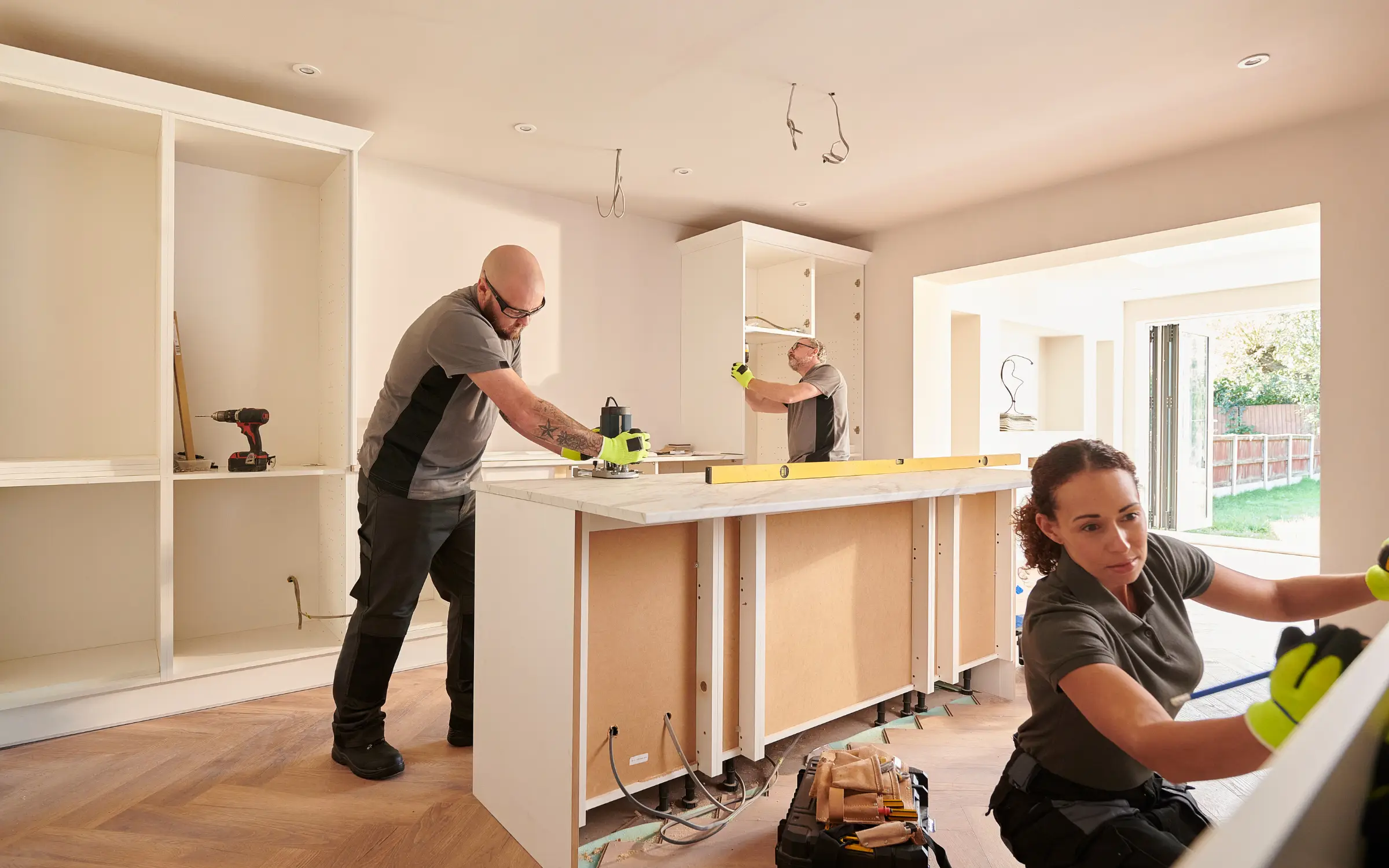
After remediation, restoration work often follows. That can mean replacing drywall, insulation, paint, trim, flooring, cabinetry, or other removed components so the home feels whole again.
Completing the full sequence really does matter. Homeowners do not just want mold addressed. They want the house put back together in a way that makes sense.
Click here to learn how professionals remove mold.
Signs a House With Mold Needs Professional Help
Some mold issues are clearly beyond the “clean it and hope for the best” stage.
Call soon if…
There is a musty odor that does not go away, mold keeps returning in the same area, the home has a known history of leaks or water damage, or porous materials like drywall, wood, insulation, or flooring seem involved. These are the kinds of situations where the visible mold is often only part of the story.
Call now if…
There was a recent water loss, visible mold is spreading, multiple rooms are showing signs, materials feel soft or wet, or there is a strong reason to believe mold is hidden behind walls or under floors. Waiting usually does not shrink the scope in those situations.
Why Waiting Makes Mold Harder to Fix
Mold problems rarely improve because you waited.
If moisture stays present, mold can keep spreading. If hidden materials remain affected, more of the assembly can become involved. If the same issue is ignored long enough, a limited repair can turn into a larger reconstruction job.
That is why waiting tends to raise the cost of mold remediation and the disruption. More demolition may be needed. More materials may need replacement. More parts of the home may have to be opened up and rebuilt.
Our goal here is not to scare you into overreacting. It’s to help you understand that mold is usually easier to fix earlier than later.
A house with mold can usually be restored very successfully. But it never restores itself.
So, Can a House With Mold Be Fixed?
Yes, in many cases, absolutely.
The better question is not, “Is the house ruined?” It’s, “What is affected, and what does it take to restore it properly?”
That is a much more useful question, because it leads to a real plan instead of a panic spiral.
Some homes need limited remediation and repairs. Some need broader removal and reconstruction. But in a lot of situations, mold means a repair and restoration problem, not the end of the house.
The smartest move is not assuming everything is fine, and it’s not assuming the worst. Call us and get clarity on the scope so your home can be fixed the right way.
Call Reyes If You Need to Know What’s Fixable and What Comes Next
If you found mold and are trying to figure out whether you are dealing with a limited repair or a larger restoration issue, call Reyes Restoration and talk it through.
A few photos or a short video can help make that first conversation more useful, especially if you can show where the mold is, what materials are involved, and whether there was a leak, overflow, or persistent moisture issue. Sometimes the answer is more reassuring than homeowners expect. Sometimes the issue is bigger than it looks. Either way, a real next step beats guessing.
That kind of calm, steady guidance fits the way we already operate on every job site: clear, respectful communication, staying focused on restoring both the property and your peace of mind.
FAQs
Is a house with mold ever a total loss?
It can happen in extreme situations, but that is not the normal outcome. Most houses with mold are not total losses and can be repaired or restored with the right remediation plan.
Can mold-damaged drywall be repaired?
Often the damaged drywall needs removal and replacement rather than simple repair. The good news is that drywall replacement is a common part of restoration work.
Does mold always mean structural damage?
No. Many mold problems affect finish materials first, such as drywall, trim, insulation, cabinetry, or flooring. Structural damage is possible, but it is not automatic.
Can hidden mold still be fixed?
Yes. Hidden mold usually means the scope has to be understood better, not that the home is beyond repair.
Is it better to fix mold now or wait until a remodel?
Usually now. Waiting often allows more materials to be affected, which can make the eventual repair more expensive and more disruptive.
Reyes Restoration is one of the most trusted names in restoration in central Maryland including Baltimore, Annapolis and Washington DC.
Specializing in water & fire damage restoration, mold remediation, and reconstruction, we leave clients across Maryland and the DMV in a better position than before the loss.
Call 410-412-8457 and speak to a technician today!