
Hidden water damage: How to Tell If Water Is Leaking Behind Walls
Some water damage is obvious. Think standing water, a collapsed ceiling or warped flooring.
But often we get calls that start like this:
“I think something’s going on behind the wall.”
Hidden water damage is common. In fact, it’s more common than dramatic flooding. Slow leaks, minor drips, small seal failures – they sit quietly until signs start appearing.
And the unfortunate reality, as Jamar says, is:
“We can’t tell the extent of damage until we start demo.”
Jamar Hinton
That doesn’t mean every wall needs to be opened, but it does mean you can’t rely on surface appearance alone.
Water damage restoration isn’t just about what you see. It’s about what moisture is doing inside materials you can’t see.
If you suspect water is leaking behind walls, here’s what to look for and when to act.
The Subtle Signs of Hidden Water Damage
Hidden moisture usually announces itself without a fanfare.
Watch for:
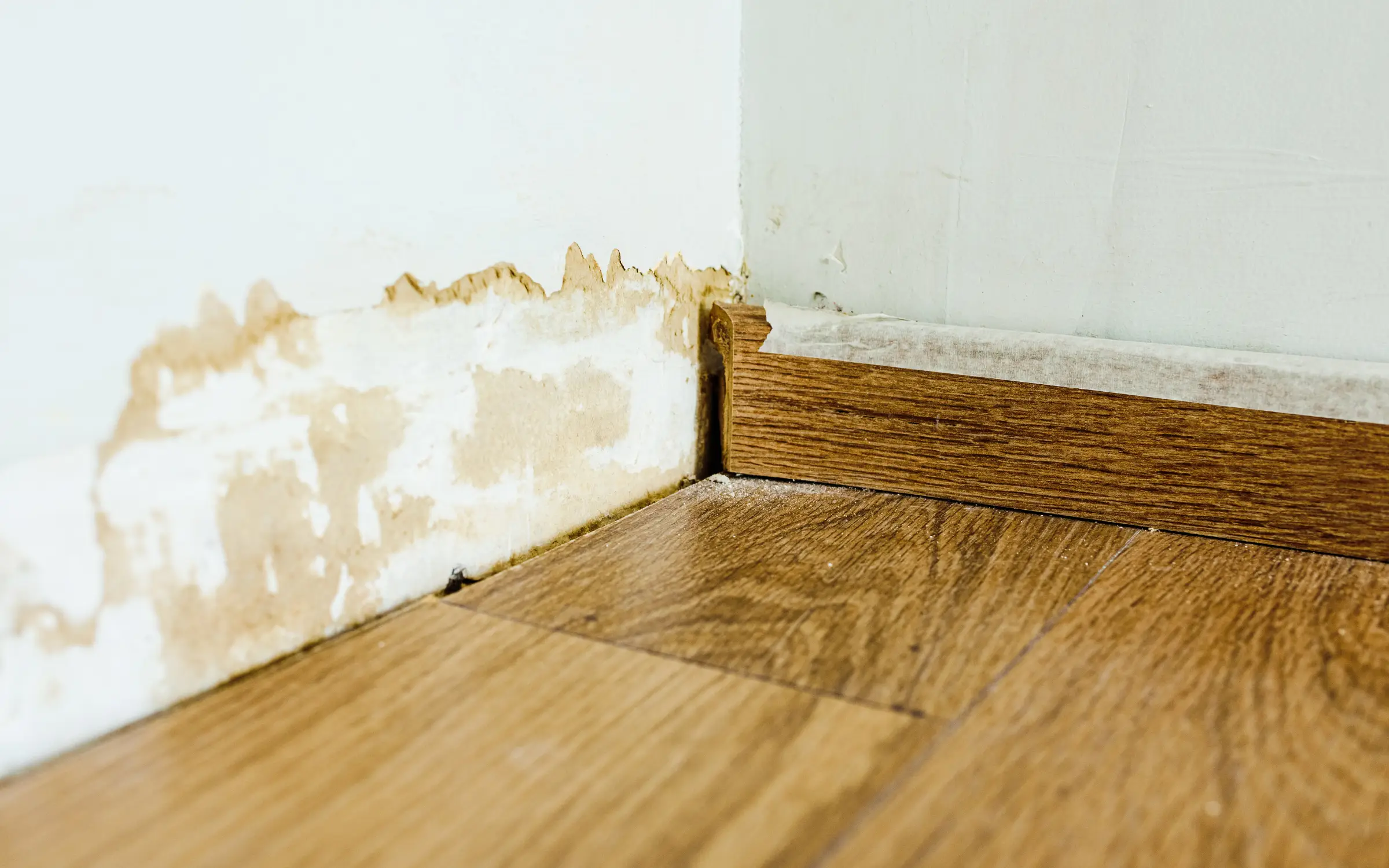
- Bubbling or peeling paint
- Soft or spongy drywall
- Warped or separating baseboards
- A persistent musty odor
- Slight floor movement near walls
- Discoloration that slowly spreads
Water travels downward and outward. A ceiling stain may originate from a pipe several feet away. A soft section of drywall may indicate moisture that migrated inside a wall cavity.
Odor is one of the earliest indicators. Damp materials have a distinct smell – not always strong, but noticeable if it lingers.
Water damage restoration professionals don’t rely on visuals (or smell) alone though. Surface staining often represents only a fraction of the affected area.
If you’re noticing more than one of these signs, it’s worth having it assessed.
If something feels off – especially combined with odor or softness – call and let’s check it properly.
Common Places Water Hides
Certain areas of a home are more vulnerable than others.
Behind kitchen cabinets is a major one.
We’ve seen slow leaks under sinks that homeowners didn’t notice for months. The cabinet base looked slightly discolored, but nothing dramatic.
Once cabinetry was removed however, we found that the subfloor underneath had deteriorated significantly.
That’s not unusual.
Other common hiding spots are:
- Behind bathroom vanities
- Around shower and tub plumbing lines
- Behind washing machines
- Around refrigerator supply lines
- Inside walls below upstairs bathrooms
- Under hardwood flooring
- Around window frames
Water follows gravity, but it also wicks sideways through drywall and insulation.
A small drip behind a wall can spread across studs and insulation long before visible damage appears.
This is where professional water damage restoration tools – moisture meters and sometimes thermal imaging – reveal what the eye can’t, and why repairs can sometimes take longer than expected.
If you suspect a slow leak in one of these areas, don’t wait for visible collapse. Early inspection prevents larger repairs.
Why You Can’t Always See the Real Damage
Drywall is deceptive because the painted surface might look intact while the gypsum core inside is saturated. Insulation behind it may be holding moisture long after the leak stops. And subfloors under hardwood can remain damp even when the boards feel dry on top.
As Jamar said:
“We can’t tell the extent of damage until we start demo.”
Jamar Hinton
It’s basic physics, because moisture spreads unpredictably. It doesn’t stop neatly at visual boundaries.
Professional water damage restoration relies on measurable readings, not guesswork, which means restoration companies have the equipment and skill to identify where the moisture is actually hiding.
Moisture meters penetrate surfaces and thermal imaging can detect temperature differences that indicate moisture pockets. These tools help determine whether walls need opening or whether drying can occur without removal.
Without measurement, it’s assumption, and those assumptions are often wrong.
Before assuming it’s minor – or before cutting into drywall yourself – let us measure it.
What Happens If You Ignore Hidden Water Damage?
Ignoring hidden water damage doesn’t make it disappear.
Over time, you may see:
- Expanding stains
- Warping materials
- Mold growth
- Increased odor
- Structural weakening
According to the EPA, mold can begin developing within 24–48 hours when moisture is present. Hidden moisture provides the perfect environment. And when mold develops inside wall cavities, remediation becomes more involved.
Ignoring moisture can also complicate insurance claims. If damage appears long-term, coverage may be questioned, even when you only decided to do something about the staining yesterday.
Water damage restoration early on might mean drying and minor repair. Months later however, it can mean structural replacement.
If you’re wondering how untreated water damage escalates, it often starts invisibly and expands gradually.
So if you smell musty air or see stains spreading, it’s time to act.
When to Open the Wall
There’s a balance here.
Opening walls prematurely can spread contaminants, increase repair scope for the water damage job unnecessarily and create cosmetic damage where drying might have sufficed. But, waiting too long can allow deterioration, increase mold risk and expand the affected area.
That’s why controlled access matters.
Water damage restoration professionals open walls strategically, i.e. only where the moisture readings justify it.
DIY demolition often creates more disruption than needed. It also eliminates the ability to measure pre-demo moisture levels accurately.
The decision to open a wall should be informed, not reactive.
Before cutting into drywall, call. We’ll determine whether it’s necessary – and how much.
Conclusion
Hidden water damage isn’t rare, and many major water losses we see didn’t begin dramatically. They began with a slow drip, a small seal failure, or a minor leak that went unnoticed.
The difference between minor repair and structural rebuild is usually timing and detection.
Water damage restoration isn’t about removing the visible stains. It’s about identifying and controlling moisture before it spreads further so damage is appropriately mitigated.
If you suspect water is leaking behind walls, don’t rely on guesswork.
Call Reyes Restoration and let us assess it properly.
A short inspection now can prevent a much larger repair later.
Looking for a more complete water damage restoration guide? Click here.
Reyes Restoration is one of the most trusted names in restoration in central Maryland including Baltimore, Annapolis and Washington DC.
Specializing in water & fire damage restoration, mold remediation, and reconstruction, we leave clients across Maryland and the DMV in a better position than before the loss.
Call 410-412-8457 and speak to a technician today!