
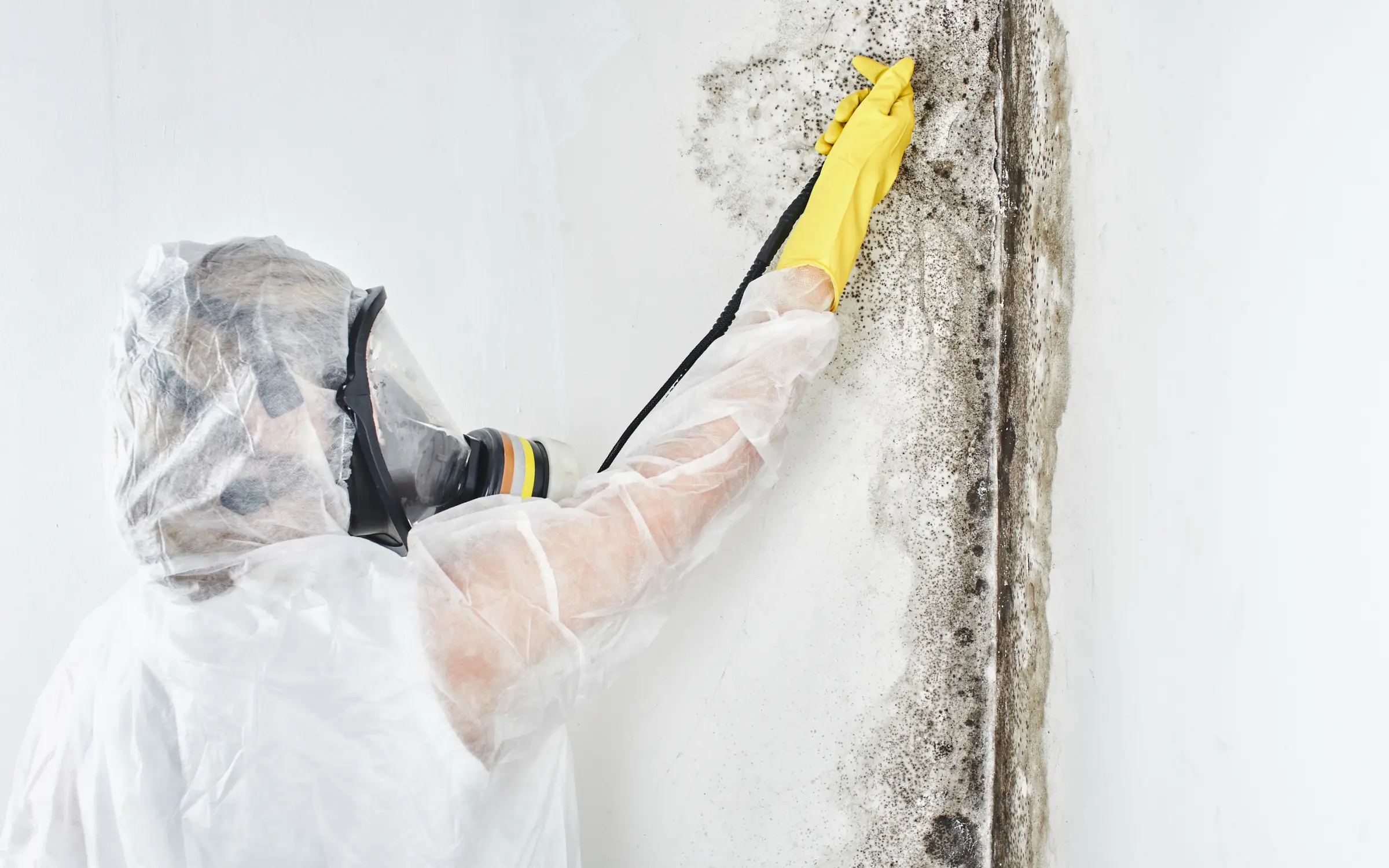
Can Mold Make You Sick? Symptoms and Health Risks Explained
When homeowners find mold, one question tends to come right behind it: is this just unpleasant to look at, or could it actually be affecting how we feel in our home?
That is a fair question. The honest answer is yes, mold can affect health, but not everyone reacts the same way. Public-health sources strongly support the link between mold exposure and symptoms like congestion, coughing, wheezing, irritated eyes, and skin irritation. Some official and clinical sources also describe cognitive and neurological symptoms in certain people, especially with longer or more significant exposure.
A quick note on scope: Reyes handles the property problem and the moisture problem. Medical concerns belong with a licensed healthcare provider. This article is here to explain the home side of the issue in plain English so homeowners know what signs to take seriously and when it is time to act.
Want to learn more? Read Mold Remediation Explained.
The Short Answer: Yes, Mold Can Affect Health, But the Response Is Highly Individual
Some people can spend time in a damp, mold-affected space and notice very little. Others feel noticeably worse. According to CDC and NIOSH, mold exposure can cause stuffy nose, sore throat, coughing, wheezing, burning or itchy eyes, and skin rash, and people with asthma, allergies, chronic lung disease, or weakened immune systems may have more severe reactions.
There is also a second layer to this conversation. NIEHS notes that extended mold exposure has been linked to cognitive issues such as short-term memory loss, lightheadedness, dizziness, blurred vision, tinnitus, and “brain fog.” That is not the part most homeowners hear about first, but it matters, especially when people say they feel off in a mold-affected environment and cannot explain why.
So the practical takeaway is simple: mold is not just a cosmetic problem. It can affect health, but the type and intensity of symptoms can vary a lot from one person to the next.
The Most Common Symptoms Linked to Mold Exposure
For many people, the first effects of mold exposure look a lot like irritation or allergy symptoms.
Sneezing, congestion, and runny nose
These are among the most common symptoms associated with mold exposure. CDC and NIOSH both list nasal stuffiness, sneezing, and runny nose as common reactions, especially in people who are allergic to mold.
Coughing, wheezing, or throat irritation
Mold exposure can irritate the airways. That may show up as coughing, throat discomfort, or wheezing, particularly in people who already have asthma or respiratory sensitivity.
Red, itchy, or watery eyes
Eye irritation is another common complaint in moldy environments. Public-health guidance specifically lists burning, red, itchy, or watery eyes among the usual symptoms.
Skin irritation or rash
Some people experience skin irritation or rash from mold exposure, especially if they are sensitive to mold or are spending extended time in a damp indoor environment.
Headaches or feeling worse indoors
Headaches are not the most specific symptom in the world, but NIEHS includes headaches among reported mold-related effects. Homeowners often describe this more generally as “I feel worse in this room” or “I feel better when I leave the house.” That pattern is worth noticing, especially when it lines up with visible mold, dampness, or a persistent musty odor.
Worsened asthma or lung irritation
People with asthma or chronic lung disease may react more strongly to mold. CDC notes that people with asthma can have more severe reactions, and immune-compromised people or those with chronic lung disease may even be at risk for mold-related lung infections.
The Neurological and Cognitive Symptoms Some People Report
This is the part of the conversation that gets less attention, but it should not be ignored.
NIEHS states that extended mold exposure has been linked to short-term memory loss, lightheadedness, dizziness, blurred vision, ringing in the ears, and loss of cognitive function, sometimes described as brain fog. Their public materials also note associations with mental health effects such as anxiety, depression, and insomnia in some settings.
Clinicians who focus more heavily on biotoxin-related illness, including Neil Nathan, often place greater emphasis on these neurological and cognitive patterns. In his clinical writing, he describes mold-related illness as sometimes involving brain fog, fatigue, headaches, and neurological symptoms, particularly in more sensitive patients. That is a clinical perspective rather than a universal public-health consensus, but it helps explain why some homeowners feel like the mold conversation they hear online, or even from their doctor, is either too narrow or too dismissive.
The safest way to say it is this: respiratory and irritation symptoms are the best-established effects, and cognitive or neurological symptoms are also reported in some official and clinical sources, especially with prolonged exposure.
Why Some People Seem More Sensitive Than Others
Mold sensitivity is not one-size-fits-all.
Public-health sources already identify groups that may be more affected, including people with allergies, asthma, chronic lung disease, and weakened immune systems. Children and older adults are also often treated as higher-sensitivity groups in indoor-environment discussions because they may be more vulnerable to respiratory stressors.
There is also a clinician-driven framework, associated with Shoemaker-style biotoxin illness work and echoed by Neil Nathan, that argues roughly 24% to 25% of people may carry certain HLA patterns associated with greater susceptibility to biotoxin-related illness. That figure is widely cited in that clinical community, but it is not presented as settled consensus by CDC or NIH public-health guidance, so it is best understood as a clinical model rather than a universally accepted population fact.
What matters for a homeowner is the practical reality: two people can live in the same house and react very differently. One may barely notice anything. Another may feel much worse.
When Mold in a Home Becomes More Concerning
Not every little bit of bathroom mildew means a major health issue. But some conditions raise the stakes.
Mold becomes more concerning when it is widespread, when the house has a strong persistent musty odor, when growth keeps returning, or when the problem started after a leak, flood, or other water intrusion that may have affected hidden materials. Mold in bedrooms, living areas, HVAC-adjacent spaces, or other parts of the home where people spend long stretches of time also deserves more attention than a tiny, one-off patch on a hard surface.
It also matters when symptoms seem tied to one space. If someone consistently feels worse in a certain room, and that room also has a musty smell, repeated staining, bubbling paint, recurring mold on caulk, or a history of water damage, that pattern is worth taking seriously. That does not prove a diagnosis by itself, but it does justify addressing the home environment instead of shrugging it off.
Why the Moisture Problem Matters as Much as the Mold
Mold is usually a sign that something in the house is staying damp.
That could mean a leak, condensation, poor ventilation, elevated humidity, or materials that never fully dried after a water event. If the moisture source is still active, the exposure is still active too. That is why homeowners get stuck in the loop of cleaning the same spot over and over again without really solving the issue.
From a property standpoint, this is the heart of the issue: a healthier indoor environment usually requires both parts of the fix. You deal with the visible contamination, and you correct the moisture condition feeding it. Skip the second part, and the first part often does not last.
What Is Sometimes Mistaken for Mold-Related Illness
Not every symptom in a house is caused by mold.
Seasonal allergies, dust, poor ventilation, other indoor irritants, and even unrelated fatigue or headaches can overlap with symptoms people associate with mold. Old water stains can also be mistaken for active mold growth when they are really leftover discoloration from a past event.
That is why homeowners do not need to self-diagnose perfectly. They just need to pay attention when symptoms and property signs line up: a musty smell, recurring mold, visible dampness, repeated staining, soft drywall, or a recent water loss. When the house keeps pointing back to moisture, it is smart to address the environment even if you do not have every answer yet.
Signs the Mold Problem Itself Needs Professional Attention
Call soon if…
There is a persistent musty smell, the same mold keeps returning, the area involves drywall or other porous materials, there is a known history of leaks or flooding, or symptoms seem tied to one room or zone of the house. Those are the kinds of situations where the visible issue may not be the whole issue.
Call now if…
There was a recent water loss, multiple rooms are affected, visible growth is spreading, materials feel soft or wet, or someone in the home is especially sensitive because of asthma, COPD, chronic lung disease, or immune compromise. CDC specifically advises that people with asthma, COPD, or immune compromise should not stay in a moldy home or be there while it is being cleaned.
What Professional Mold Remediation Helps With
Professional mold remediation is about more than wiping down visible spots.
The job is to identify the moisture source, evaluate how far the problem has spread, contain the area when needed, remove materials that cannot be saved, clean surfaces that can be salvaged, and dry the structure properly so the problem is less likely to return. From a homeowner’s perspective, the point is to create a cleaner, safer indoor environment by dealing with both the contamination and the moisture behind it.
What to Do If You Think Mold Is Affecting Someone in the House
If symptoms and home conditions seem to be lining up, do not ignore that.
Avoid disturbing the area more than necessary. Repeated scrubbing, opening walls, or trying random fixes can make the property side harder to understand. Instead, document what you are noticing: where the odor is strongest, where visible spots keep returning, whether there was a recent leak, and whether anyone feels worse in a particular area of the house. Photos help too.
For symptoms or medical questions, contact a licensed healthcare provider. For the building issue itself, contact a mold remediation professional to fix the mold problem at its source. That split matters. A doctor helps with the person. A remediation company helps with the property.
Call Reyes If Mold in Your Home Is Raising Health Concerns
When mold is raising health concerns, most homeowners want someone to help them sort out whether the home is showing a real moisture problem, whether the visible mold is likely part of something bigger, and what the next practical step should be.
That is the kind of conversation Reyes can have.
Call Reyes Restoration to talk through what you are seeing. If it helps, send a few photos or a short video of the area. That can make the first conversation more useful and help narrow down whether the issue looks limited or whether it makes sense to investigate further. Reyes’ existing site voice is at its best when it sounds calm, prepared, and respectful under pressure, and that is exactly the tone homeowners need here.
FAQs
Can a small amount of mold make you feel sick?
It can for some people, especially those with allergies, asthma, or higher sensitivity. Reactions vary a lot from person to person.
Is black mold always the most dangerous kind?
Color alone does not tell you how serious a mold problem is. The bigger issue is the amount of mold, the moisture feeding it, and how the people in the home are reacting.
Can mold affect your brain or cause brain fog?
Some official and clinical sources say extended mold exposure has been linked to cognitive symptoms such as brain fog, dizziness, and short-term memory issues in some people.
Why does one person in the house feel worse than everyone else?
Sensitivity varies. Public-health sources identify allergy, asthma, chronic lung disease, and immune compromise as factors, and some clinician frameworks also argue genetic susceptibility may play a role for a subset of people.
Should I call a doctor or a mold company first?
For medical symptoms, call a licensed healthcare provider. For the property issue, call a mold remediation company. In many cases, both sides matter.
Reyes Restoration is one of the most trusted names in restoration in central Maryland including Baltimore, Annapolis and Washington DC.
Specializing in water & fire damage restoration, mold remediation, and reconstruction, we leave clients across Maryland and the DMV in a better position than before the loss.
Call 410-412-8457 and speak to a technician today!