
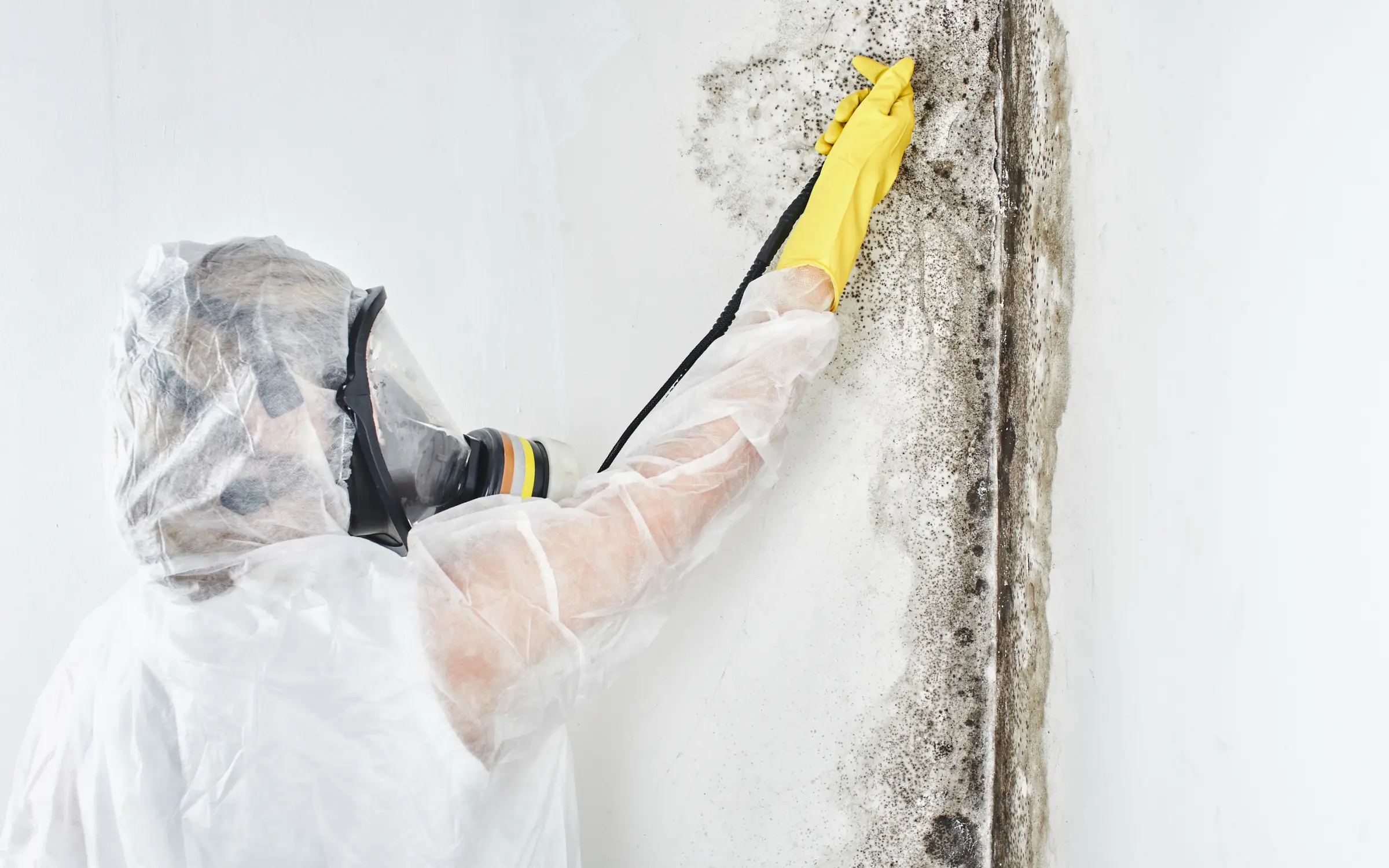
Can water damage cause mold?
Mention water damage, and someone somewhere will usually say one often dreaded word:
“Mold.”
For a lot of homeowners, that’s the part that feels scariest. The internet doesn’t help. Everything becomes “black mold.” Everything sounds dangerous. Everything feels urgent.
Let’s slow that down.
“Nine times out of ten… if it’s mold involved it’s because the job was neglected when it was just a water issue.”
Jamar Hinton
And that’s why delay is the #1 reason water damage jobs turn into mold jobs.
Mold doesn’t appear because water touched a surface. It appears when moisture remains trapped long enough to create the right conditions for growth.
Professional water damage restoration is designed specifically to interrupt that process – to dry materials before mold has the opportunity to colonize.
In this article, we’ll answer the real questions:
- How quickly can mold start?
- How likely is it after a leak?
- Can you prevent it yourself?
- And when should you call a professional?
We cover everything you need to know about water damage restoration in another article, but for this one, let’s start with timing.
How Quickly Can Mold Start After Water Damage?
In ideal growth conditions, mold can begin developing within 24–48 hours of moisture exposure. That’s not a scare statistic, it’s just how the biology works.
Mold needs three things:
- Moisture
- Organic material (drywall paper, wood, insulation)
- The right temperature
Homes typically provide all three. The only variable is moisture.
“Time is very important.”
Jamar Hinton
If water is dried properly within that first window of opportunity, mold risk drops significantly.
If moisture remains trapped inside materials, the likelihood increases.
This is why early water damage restoration focuses heavily on rapid extraction and structural drying, not just cleaning the visible water.
If you’re within the first 48 hours of a leak, this is the moment to act. Drying now prevents a bigger issue later.
Why “It Looks Dry” Doesn’t Mean It Is
One of the most common misconceptions after a leak is when someone sees the water dried up and assumes they’re fine.
Surface dryness is misleading, especially if you’ve tried to dry it yourself.
Drywall absorbs moisture internally. Insulation holds water like a sponge. Subfloors can stay damp underneath finished flooring even when the surface feels solid.
“A lot of times they think they can handle it themselves with towels… but they don’t have the equipment to properly dry it.”
Jamar Hinton
Household fans move air. They don’t create the drying pressure needed to extract moisture from within materials.
Professional water damage restoration uses:
- Commercial air movers
- Dehumidifiers calibrated to the space
- Moisture meters to track internal readings
Dry isn’t a visual assessment. It’s a measurable and technically defined condition.
When moisture lingers inside cavities, mold doesn’t need dramatic flooding to grow. It just needs damp organic material, the right air humidity, and time.
If you’re unsure whether your space is truly dry, let us measure it properly. Guesswork is what creates mold problems.
The Truth About “Black Mold”
This may surprise you, but you cannot identify mold species by color alone. There are over 100,000 different species of mold and they’re not all as dangerous as each other.
The phrase “black mold” gets used loosely online. In reality, mold type can only be confirmed through proper testing, because some species are darker and some are lighter. Some species are actually are harmless in small quantities.
The other side of the coin is that:
“There’s no such thing as a house without mold.”
Jamar Hinton
Mold spores exist in the air everywhere – indoors and outdoors. The goal is not achieving a sterile home. The goal is preventing the moisture conditions that allow spores to colonize surfaces.
Most residential mold situations tied to water damage are manageable when addressed properly.
The panic often comes from misinformation – not measured assessment.
If you see discoloration or suspect growth, don’t jump to conclusions. Get it tested, measured, and then respond appropriately.
Can Homeowners Prevent Mold Themselves?
Sometimes.
If you spill a small amount of water on tile and dry it immediately? That’s manageable.
If there’s a visible patch of mold under 10 square feet, the EPA notes that small areas can sometimes be cleaned with appropriate precautions.
But once mold growth extends beyond a small surface area – or when it’s inside wall cavities – the situation changes.
“They could [remediate themselves]. Do I recommend it? No.”
Jamar Hinton
Why?
Because disturbing mold without containment can spread spores into unaffected rooms, contaminate HVAC systems and increase the affected square footage.
Professional mold remediation, often following water damage restoration, includes:
- Containment barriers
- Negative air machines
- Proper PPE
- Controlled removal procedures
Trying to shortcut that can expand the problem, and contaminate otherwise unaffected rooms.
If mold growth extends beyond a small surface patch, call. Containment matters.
How Often Does Water Damage Actually Lead to Mold?
Here’s the real answer: Water damage does not automatically equal mold. But untreated or improperly dried water damage frequently leads to mold.
The difference is timing and method.
When water damage restoration begins quickly and drying is monitored with moisture meters, mold risk decreases significantly.
When water is ignored – or surface-dried only – the likelihood increases.
If you’re wondering what happens when water damage is left untreated, the escalation usually involves both structural deterioration and microbial growth over time.
Moisture is the deciding factor.
If you’re unsure whether your previous drying was sufficient, let’s check it properly. A short assessment can prevent long-term issues.
Conclusion
Mold isn’t mysterious. It isn’t random. And it isn’t inevitable.
It’s moisture-driven.
Water damage can cause mold when drying is delayed or incomplete. But early, proper water damage restoration interrupts that cycle.
The key variables are:
- Response time
- Moisture measurement
- Proper drying equipment
- Containment when needed
If you’ve had a leak and you’re unsure whether mold is a risk, or if you’re already seeing signs, call Reyes Restoration and talk to a technician.
We’ll assess it clearly, explain what’s happening, and guide you through the next steps without panic or exaggeration.
Moisture creates mold. Drying prevents it. And Reyes fixes it.
Reyes Restoration is one of the most trusted names in restoration in central Maryland including Baltimore, Annapolis and Washington DC.
Specializing in water & fire damage restoration, mold remediation, and reconstruction, we leave clients across Maryland and the DMV in a better position than before the loss.
Call 410-412-8457 and speak to a technician today!