
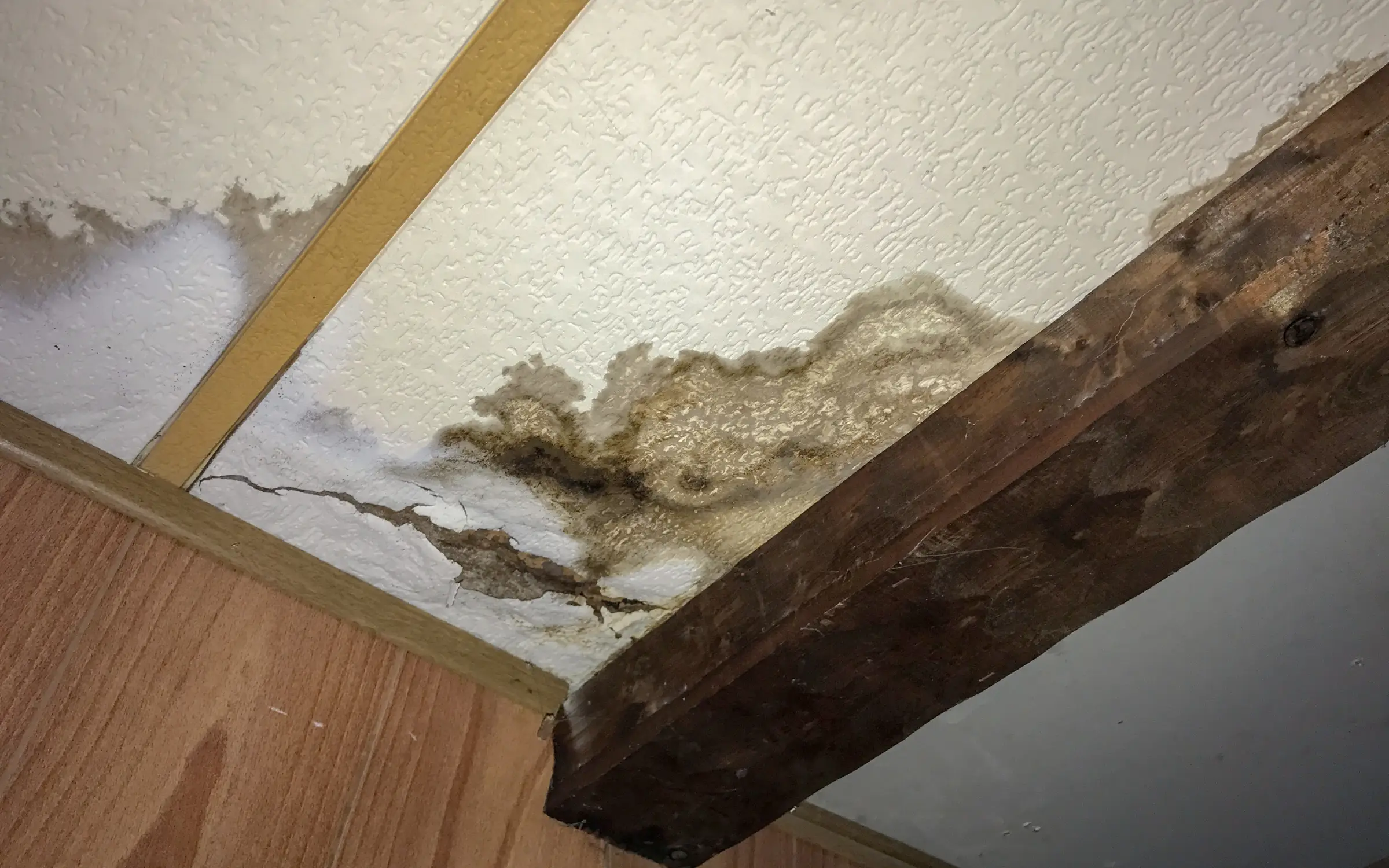
What happens if water damage is left untreated?
A lot of water damage doesn’t look urgent.
The leak stops. The surface dries. The stain fades a little. Life moves on.
But that’s usually when it gets worse.
What turns a manageable situation into a major repair isn’t always the size of the leak, it’s the delay afterward.
“Nine times out of ten… it becomes mold involved because it’s been neglected when it was just a water issue.”
Jamar Hinton
That line isn’t meant to scare anyone. It’s meant to explain a pattern.
Water damage restoration is most effective when it starts early. When moisture is left sitting inside walls, under floors, or inside insulation, the damage compounds silently.
In our complete guide to water damage restoration, we break down causes and the repair process. Here, we’re focusing on what happens when water is ignored – and how quickly that changes the scope of repair.
Let’s walk through the timeline.
The First 24–48 Hours: The Invisible Window
The first two days after water intrusion are critical.
Even if the surface looks dry, moisture may still be present inside:
- Drywall cores
- Insulation
- Subfloor layers
- Cabinet bases
Drywall acts like a sponge, and insulation holds water even longer. Subfloors can retain moisture underneath finished flooring long after it’s dry underfoot.
And most homeowners don’t realize that mold can begin growing within 24–48 hours when moisture is present.
That doesn’t mean your house instantly becomes unsafe, but it does show that moisture creates conditions where growth can begin if drying is incomplete.
As Jamar puts it:
“Time is very important.”
Jamar Hinton
The danger in this window isn’t visible collapse. It’s trapped moisture that hasn’t been measured.
Professional water damage restoration uses moisture meters to confirm whether materials are actually dry – not just dry to the touch.
If you’re within this 24–48 hour window, this is the moment to act.
If water entered your home in the last two days, call now. Early drying keeps this manageable.
Days to Weeks: Structural Deterioration Begins
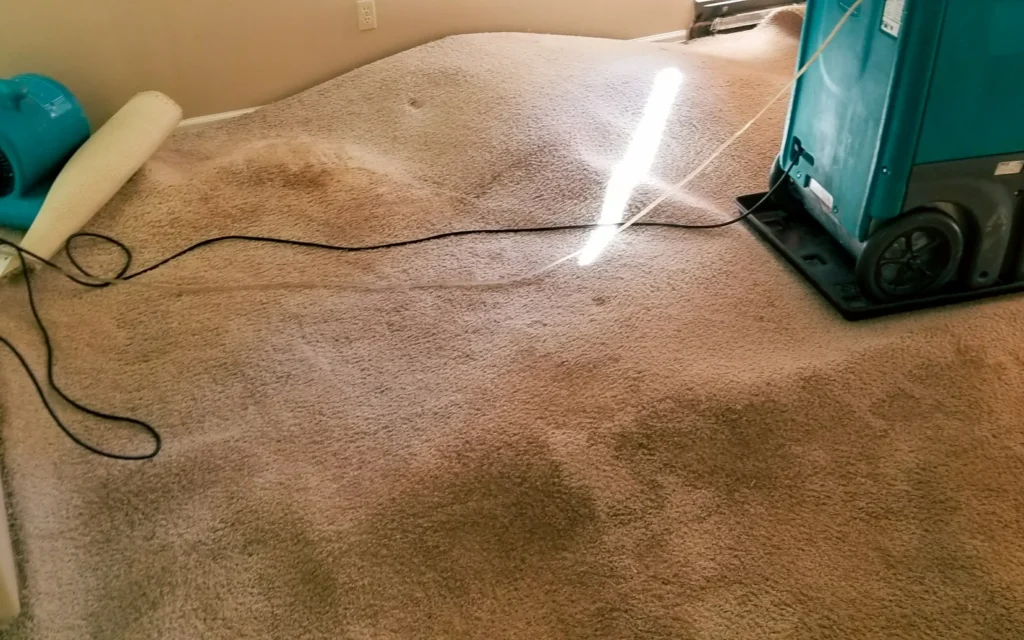
If moisture remains inside building materials, deterioration starts slowly.
Wood absorbs water and swells. Subfloors soften. Cabinet bases delaminate. Fasteners begin to corrode.
You might notice:
- Musty odor
- Slight floor movement
- Warping trim
- Discoloration expanding
None of these happen overnight. That’s why untreated water damage can feel harmless at first.
But moisture doesn’t evaporate from inside wall cavities on its own. Especially in humid climates, it can linger for weeks.
The longer it sits, the more likely selective demolition becomes full replacement.
Water damage restoration early on might mean drying and minor repairs. Weeks later, it can mean:
- Subfloor replacement
- Cabinet replacement
- Multi-room drywall removal
The difference is timing.
Don’t let a small leak turn into structural repair. If it hasn’t been professionally assessed, it’s worth the call.
Mold Growth and Air Quality Concerns
Here’s where untreated water damage becomes more complicated.
Now mold spores are naturally present in every home.
“There’s no such thing as a house without mold.”
Jamar Hinton
So spores aren’t the problem. The moisture is.
When moisture remains trapped, spores can colonize damp materials. Once growth begins, disturbing affected areas without containment can spread spores to unaffected rooms. And then the mold can start to grow there too.
While some homeowners attempt to clean visible mold themselves:
“They could. Do I recommend it? No.”
Jamar Hinton
Why? Because improper removal can:
- Spread contamination
- Drive spores into HVAC systems
- Increase affected square footage
- Not to mention damage your health long-term
Professional water damage restoration – especially when mold is involved – includes containment, negative air pressure, and proper protective equipment.
If you’re noticing a musty smell weeks after a leak, that’s a sign moisture may still be present.
If you’re concerned about how likely mold is after a leak, it’s important to understand whether water damage can cause mold in your situation and what proper prevention requires.
If you smell something off, don’t ignore it. Odor is often the first sign moisture hasn’t fully dried.
Financial Consequences of Waiting
Water damage becomes more expensive the longer it’s left untreated.
A small drywall patch early on might cost far less than full cabinet replacement weeks later.
There’s also an insurance component to consider.
“Anything within the envelope of the house – like a broken pipe – is usually covered.”
Jamar Hinton
Insurance typically covers sudden and accidental events, not long-term neglect or seepage.
If water damage appears to have been ongoing for an extended period without action, insurance coverage in water damage claims may become more complicated.
That’s why documenting early and initiating water damage restoration quickly protects not just your structure, but your financial position.
And as discussed in our article on how long it takes to repair water damage, extended delays also increase the overall timeline of disruption.
If you’re unsure whether to file a claim, call before assuming anything. A short conversation can save a costly mistake.
When Is It Too Late?
Almost never.
Even significant water damage can be repaired. Homes are rebuilt every day after major losses.
But “repairable” doesn’t always mean “minimal.”
The longer moisture sits, the more extensive the work becomes.
“Water damage can always be fixed… it’s just a matter of how extensive the repairs are.”
Jamar Hinton
Water damage restoration is scalable. Early response keeps it controlled. Delayed response expands it.
The difference is rarely luck. It’s timing.
Conclusion
Water damage rarely announces itself loudly after the first event.
It dries on the surface. It fades into the background. And behind the scenes, it spreads.
What turns water damage into mold growth, structural deterioration, and larger repair bills isn’t always the initial leak. It’s the waiting.
If water entered your home and hasn’t been professionally assessed – even if it “looks fine” now – it’s worth checking.
Call Reyes Restoration and let us measure moisture properly.
Early water damage restoration protects your home, your health, and your finances.
Delay is the only part that makes it permanent.
Reyes Restoration is one of the most trusted names in restoration in central Maryland including Baltimore, Annapolis and Washington DC.
Specializing in water & fire damage restoration, mold remediation, and reconstruction, we leave clients across Maryland and the DMV in a better position than before the loss.
Call 410-762-4085 and speak to a technician today!